
Commitments Adopt FAQ Display the Mark
IVC Trust Mark

The Integrative
Values Charter

The world's deepest problems don't fit inside any single framework. Neither do the people working on them.

A voluntary trust mark for individuals, organizations, and initiatives committed to the depth, honesty, and care that our moment demands. Display the mark. Find your people. Hold each other to it.

The systems are breaking—
and something is already emerging

The institutions that built the modern world can no longer navigate the complexity they've created. Ecological overshoot, the collapse of shared sensemaking, political polarization, the transformation of society by exponential technologies—these aren't separate crises. They form a single pattern, and no single framework, tradition, or ideology has the resources to address them alone.

But a response is already in motion. Across every domain—science, education, governance, design, spirituality, technology, community—millions of people have quietly developed the capacity the present moment requires: the ability to hold multiple truths without losing coherence, to honor both rigor and interiority, critique and commitment, local belonging and planetary responsibility.

They don't all use the same language. Many don't know others see the world the way they do.

They are an invisible network—and the Integrative Values Charter exists to make it visible.
Artist at an easel, seen from behind — creative depth and focused attention

A trust mark, not a membership

The Integrative Values Charter is a voluntary, self-attested trust mark—a public signal of alignment with eight shared commitments. Think of it as analogous to Fair Trade or Creative Commons: a recognizable mark that tells the world what you stand for, without requiring organizational membership or philosophical agreement.

What the mark means

  • You take the eight commitments seriously and hold yourself to them publicly
  • You welcome being held to them by others
  • You are part of a growing network of people, projects, and organizations orienting around integrative values

What the mark does not mean

  • It is not an endorsement by any organization
  • It is not a certification or a license—no one audits your compliance
  • It is not agreement with a particular philosophy, metatheory, or tradition
  • It does not require you to use any specific language or adopt any specific framework

The charter is specific enough to mean something and open enough to welcome everyone who genuinely holds these values. Its specificity is its accountability: the commitments are public, so alignment—or the lack of it—is legible.

What we stand for

These eight commitments are the substance of the charter—what you affirm when you display the mark. They are expressed in plain language because they are meant to be lived, not only analyzed.

Deep canyon with geological strata and a lone figure — honoring the depth of things

I. Honor the Depth of Things

Our institutions reward flattening—reducing complex realities to simple metrics, single causes, or partisan slogans. We believe reality runs deeper than any single explanation can capture—from matter to life to mind to culture, each layer brings forth something genuinely new that cannot be reduced to what came before. We commit to meeting this depth on its own terms, because the crises we face cannot be solved at the level of thinking that produced them. The surface is never the whole story, and the story is still unfolding.

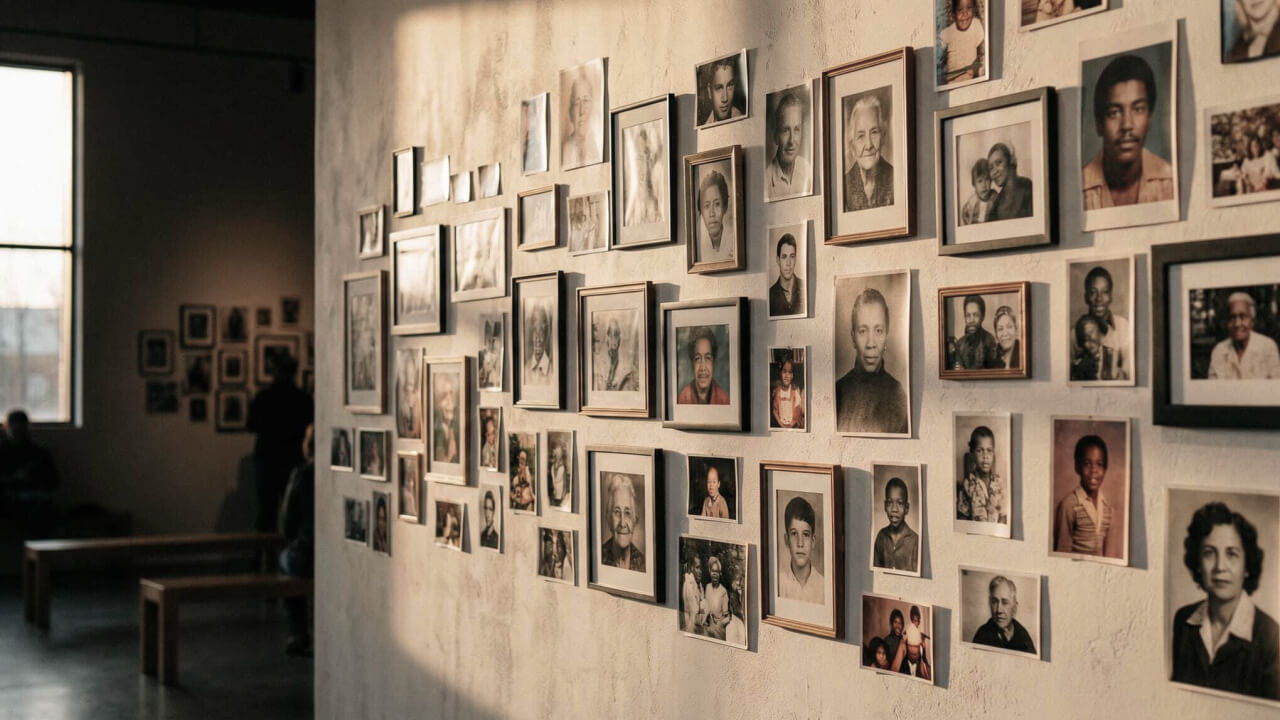
Gallery wall of diverse portraits — every perspective captures something real

II. Everyone Is Right

In a world sorting itself into tribes that can no longer learn from each other, we start from the conviction that every perspective captures something real and important—something that cannot be seen from anywhere else. This is not relativism, and it is not a totalizing system that swallows all others. It is the deeper work of discovering how different truths fit together, where they genuinely conflict, and which syntheses hold up under scrutiny. Be broad in what you consider, and discerning in what you accept. Integration is not a gesture—it is a practice, and one our fractured moment desperately needs.

Two people in open conversation at sunset — holding strong views with open hands

III. Hold Strong Views with Open Hands

When shared sensemaking breaks down, the temptation is either to grip harder on what we already believe or to give up on truth altogether. We choose a third way: truth above tribe. We take positions seriously and hold them fallibly—approaching inquiry with both wonder and humility, knowing that every perspective is shaped by the place we stand. We commit to making ourselves visible through transparency and vulnerability: here's what we value, here's how we're thinking, here's what we're assuming, and here's why. Not because certainty is impossible, but because transparency is how understanding grows. Intellectual courage and intellectual humility are the same commitment.

Snowflake crystal in sharp detail — the precise structure of natural values

IV. Ground Our Values in Reality

A civilization that has lost confidence in the reality of its own values cannot coordinate around anything but power and preference. We believe that values are not arbitrary and that goodness exists—that flourishing and suffering, justice and exploitation, beauty and degradation are real features of the world, not merely cultural preferences or subjective opinions. This holds for people, for society, and for the entire web of life. Values are not static commandments but emergent, dynamic, and discoverable—and all the more binding for that. We commit to making our judgments of goodness transparent rather than concealing them behind claims of neutrality.

Woman drafting plans overlooking a green valley — acting for flourishing

V. Act for Flourishing

Understanding without action is incomplete. We orient our work and our lives toward expanding the conditions for creative, meaningful life—for people, for communities, for the living systems we are part of. We do not settle for a broken status quo when something better is concretely possible. Our hope is not vague optimism; it is grounded hope, fueled by real projects and the serious, visionary imagination of what could actually be built. We hold ourselves accountable to the world our work helps create.

Person crossing an ancient stone bridge through mist — serving what unfolds

VI. Serve What's Unfolding

The pressure to move fast—to disrupt, to accelerate, to skip ahead—is immense. But we recognize that growth is real and that it cannot be rushed past its own foundations. Development has direction: greater complexity, deeper awareness, wider care. Growth that leaves its past behind is not growth—it is dissociation that creates shadow that inevitably causes future harm. We honor the full arc of development in life, from the simplest to the most encompassing, knowing that each stage is necessary in what comes next. In a world racing forward blindly, this commitment to serve the wisdom of development is a foundation of building a society that can flourish.

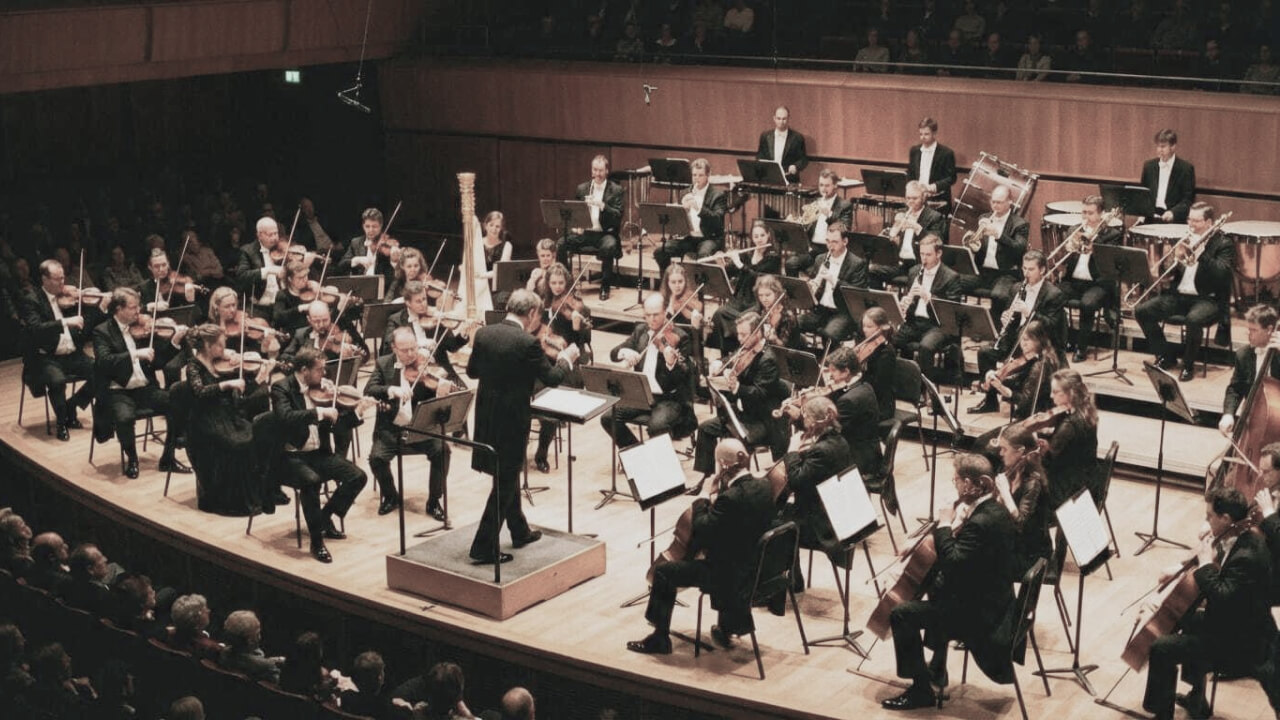
Orchestra performing together — belonging to the whole

VII. Belong to the Whole

Fragmentation is the signature failure of our time—of knowledge split into silos, communities walled off from each other, individuals cut off from the systems they depend on, and each of them recreating the very problems from which they say they want to be freed. To do so requires that we take full responsibility at whatever level we can for transforming the conditions we reproduce. In turn, this requires we understand ourselves as participants in a reality that is deeply interconnected, where part and whole shape each other at every scale. Unity-in-diversity is not a slogan but a structural feature of reality itself. We commit to thinking in whole systems and acting from our embeddedness within them, not from above or outside.

Person standing inside a giant ancient tree, gazing at the forest — tending the living world

VIII. Tend the Living World

Every commitment in this charter rests on a planet that is alive, finite, and under stress. We are members of nature, not masters of it. The living systems that sustain us have intrinsic worth—not merely instrumental value to be optimized. We commit to regeneration over extraction, stewardship over dominion, and kinship over conquest—because honoring depth, development, and interconnection means nothing if we ignore the ecological ground on which all of it depends.

Display the mark

Adopting the Integrative Values Charter is simple and voluntary. There is no application process, no fee, and no gatekeeping.

For Individuals

  1. Read the eight commitments
  2. If you hold these values—genuinely, not performatively—you're in
  3. Display the IVC mark on your website, social profiles, or communications
  4. Link back to this site so others can discover what it means

For Organizations

  1. Read the eight commitments with your team or leadership
  2. Determine whether the charter reflects your actual values and practice
  3. Display the IVC mark on your website, materials, or products
  4. Consider publishing a brief statement about how the commitments show up in your work

For Networks & Communities

  1. Share the charter within your community
  2. Discuss which commitments resonate and where the creative tensions are
  3. Adopt the mark collectively if your community aligns
  4. Use the commitments as a shared reference point for dialogue and accountability
IVC Trust Mark

The mark assets

Usage is free. The mark may not be modified or used to imply endorsement. Full usage guidelines are included in the download.

Download the IVC Mark

Legibility, not enforcement

The Integrative Values Charter has no compliance office and no audit process. It is a self-attested mark. So how does it have teeth?

Through specificity

The commitments are concrete enough that alignment—or misalignment—is publicly legible. If someone displays the mark while consistently flattening complexity, refusing to engage perspectives they find uncomfortable, or concealing their reasoning—the charter's own language makes the gap visible.

Through community

As the network of charter holders grows, so does the ambient accountability. The mark creates a shared vocabulary for saying: this is what we committed to—are we living it? The charter is an invitation to be held to something, not a shield against criticism.

Through self-correction

The most important accountability is internal. The commitments are designed to function as a mirror: a set of values you return to when making hard decisions, not a badge you display and forget.

Diverse people studying together in a sunlit library — going deeper together

Philosophical Grounding

The eight commitments are not arbitrary. Each one translates specific core principles of an emerging integrative worldview—claims shared across Integral Theory, Critical Realism, UTOK, Meta-Reality, Complex Thought, and other integrative metatheories—into the register of lived values.

Part Two of the full charter document maps each commitment to its philosophical foundations, showing what is preserved in translation and why the plain-language formulation was chosen.

Read the Full Charter

Who holds the charter

The IVC Directory will be a public listing of individuals, organizations, and projects that have adopted the Integrative Values Charter—searchable by domain, geography, and area of work.

If you've adopted the charter and want to be listed when the directory launches, register your interest below.

Register for the Directory

Common Questions

Who created the Integrative Values Charter?

The IVC was developed through the Institute of Applied Metatheory's Integrative Commons initiative—a collaborative effort to create open, non-proprietary infrastructure for the integrative worldview. The charter is not the property of any single organization.

Do I need to know anything about integrative metatheory to adopt the charter?

No. The commitments are written in plain language and stand on their own. Part Two of the charter provides the philosophical grounding for those who want it, but reading it is not required. If the eight commitments describe values you hold, you're welcome to adopt the mark.

Is this a membership organization?

No. There are no dues, no meetings, no hierarchy. The IVC is a protocol, not an organization—like Creative Commons or the Open Source Definition. You adopt the mark and the commitments; you don't join a club.

Can my organization adopt the charter even if not everyone agrees with every commitment?

Yes. The charter is aspirational—it describes values you are working toward, not a standard you must perfectly embody. What matters is genuine alignment and the willingness to be held accountable. Most organizations will find some commitments more natural than others. That's expected and healthy.

What if someone displays the mark but clearly doesn't hold the values?

The charter's specificity is its defense. The commitments are concrete enough that misalignment is publicly visible. The community of charter holders is the accountability mechanism—through conversation, not enforcement. A mark that is visibly misused loses its meaning for the person misusing it, not for the community.

How is this different from other values statements or manifestos?

Three things distinguish the IVC. First, it is a mark—a visual signal designed to create network legibility, not just a document to be read and shelved. Second, it is grounded in the convergent core principles of multiple integrative metatheories, not a single tradition's perspective. Third, it is designed to be adopted across domains—by a scientist, a community organizer, a tech company, and a contemplative community, each expressing the same values differently in their own context.

Will the charter evolve?

Yes. The charter is a living document. As the community of charter holders grows, the commitments may be refined, expanded, or reworded. Changes will be made transparently and with input from the community.